

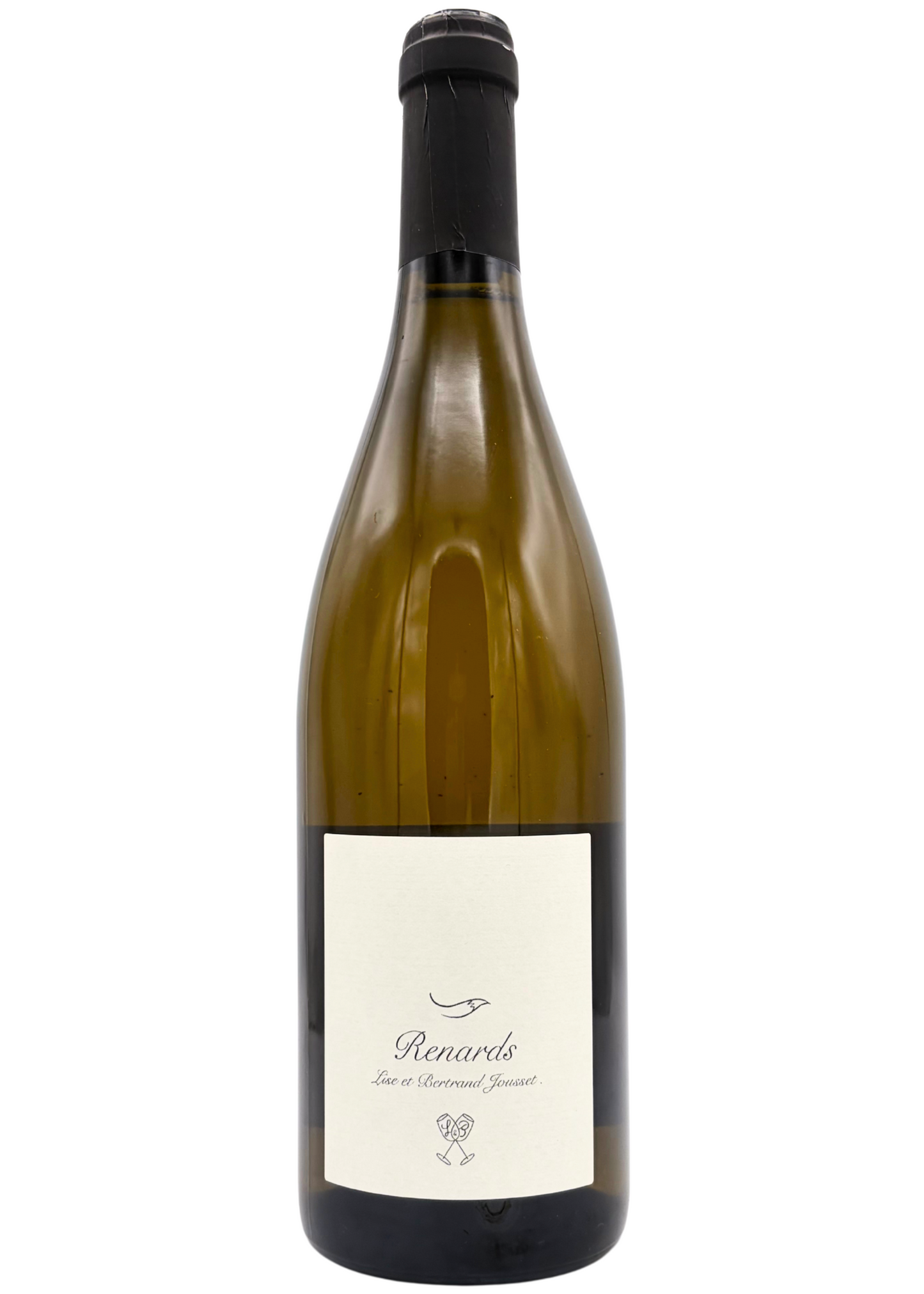
Domaine Jousset Clos aux Renards 2018
Domaine Jousset Clos aux Renards 2018
Couldn't load pickup availability
80+ year-old vines from a a small production single vineyard. Aged for a year in oak, then further aged in stainless steel for another year before bottling. To call this a "good drop" would be an understatement. There are so many tones and flavours, almost entirely showing off all of Chenin's potential expressions, from white peach to hints of almond. The balance that the Joussets continue to achieve with this cuvée gives plenty of gastronomic potential. Age-worthy for at least another 20 years.
COUNTRY Loire Valley, France
APPELLATION Vin de France
VARIETY Chenin Blanc
ABV 14.5%
STYLE Deep & Structured
WINEMAKER Domaine Jousset
This one's a keeper! If you can bear it, forget about this in your cellar for a few years, we promise it’ll blow you away.
ABOUT THE REGION
Located in central France, the Loire Valley is renowned for its picturesque vineyards and historic winemaking tradition. Stretching along the longest river in France, the Loire, this region is celebrated for a variety of terroirs and for producing different wines - ranging from crisp whites to elegant reds and sparkling varieties. Popular grapes cultivated here include Chenin Blanc, Sauvignon Blanc, Cabernet Franc, and Melon de Bourgogne.
Share
Organic, Biodynamic and Natural wine. What’s the difference?
To understand this concept and its various ramifications, it is necessary to keep something clear in mind: before the 20th century and the spreading of affordable synthetic fertilisers, all farming was organic. When the shift to the use of synthetics and pesticides happened, it became necessary to diversify traditional organic farming from the new modern farming.
ORGANIC WINE
Simply put, organic farming forbids the use of synthetic fertilisers, synthetic pesticides, herbicides, or genetically modified organisms. The basic requirements are generally specific and engage the farmers not to use any chemical fertilisers and other synthetic products in the vineyard. It does not prevent the vintner from using the conventional winemaking process after harvesting.
BIODYNAMIC WINE
Let’s take organic farming one step further: Biodynamic. The creator of this agricultural system is the Austrian philosopher Rudolf Steiner, who developed the principles of biodynamics in a series of lectures given in 1924 in Germany. Here lies the foundation of true organic wines, with a strict limit in the use of additives, stringent requirements and at the end obtaining a biodynamic certification.
NATURAL WINE
The previous definitions are usually, and rightfully, associated with it, because most natural wine is also organic and/or biodynamic. But not vice versa!
Natural wine is wine in its purest form, simply described as nothing added, nothing taken away, just grapes fermented. No manipulation whatsoever, minimal intervention both in the vineyards and in the winery. Healthy grapes, natural yeast and natural fermentation, with no filtration nor fining. Sounds easy, right? However, making natural wine is unforgiving and it requires a bigger amount of work than conventional wine. To this day, natural wine has no certification yet.